Projektinitiativ #109: Tribo-mechanical Response of Austenitic Stainless Steels to Low Temperature C
Austenitic stainless steels possess excellent resistance to corrosion and environmental degradation due to outstanding passivation ability. However, low hardness and poor wear resistances have limited their tribological applications. Carburizing has long been widely used to improve the hardness and tribological properties of many types of metallic materials in industrial applications. However, the conventional thermochemical treatments are not suitable for austenitic stainless steel because it is usually carried out at high temperatures between ~ 850 and 950°C. Owing to the rapid precipitation of chromium carbides, chromium in solid solution depletes, impairing significantly the corrosion resistance which is considered as the major advantages of stainless steels.
16 februari,
2017
•
2 minuters läsning
The development of the metastable austenite supersaturated with C, i.e. the so-called “expanded austenite” or “S-phase” in austenitic stainless steels by low temperature processes opened the possibilities to challenge this technical issue. This phase is precipitate free with C solubility several orders of magnitude larger than the equilibrium one. It provides an excellent combination of mechanical and corrosion properties. When carbon is present in solid solution, our potentiodynamic tests in diluted H2SO4 solution revealed improved corrosion resistance of the alloys. We have also observed significant enhancement of surface hardness which is typically 3‒4 times larger than that of untreated materials in 304 and 904L. It is expected that wear resistance of the selected austenitic stainless steels can be significantly enhanced through this treatment. The aim of this study is to investigate the tribo-mechanical response of selected austenitic stainless steels to low temperature carburizing (Kolsterising) in both dry and wet sliding conditions.
We intend to clarify the relationship between microstructure and tribo-mechnical property of the above mentioned carburized stainless steels. The related phenomena taken place during the wear process such as surface morphology and chemistry, redistribution of the interstitials, tribological interaction with the environment, wear mode will be studied by means of a combination of different techniques. We expect to extend the applicability of stainless steel for tribological applications in chemical, food and automotive industries, medical and pharmaceutical equipment. The goal is to meet the increasing demand for high performance and durable components.
Namn Yu Cao Organisation Chalmers Tekniska Högskolan
AI och bättre modeller kan göra materialutvecklingen snabbare och tillverkningen mer träffsäker. Men när fler får tillgång till samma verktyg blir frågan vad som ska ge svensk stålindustri ett försprång. Under Jernkontorets forskningsjubileum återkommer behovet av att koppla samman hela kedjan, från råvara till användning. Samtidigt väcks en fråga för den gemensamma forskningen: hur mycket kommer företagen att vilja dela med sig av sina data?
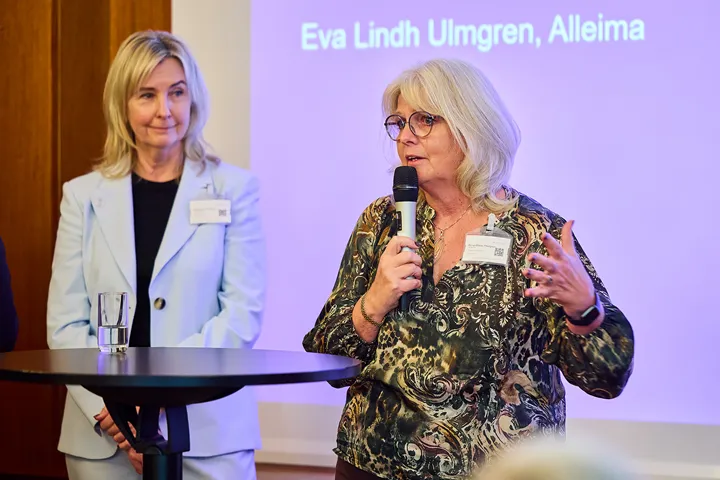
Eva Lindh Ulmgren och Rose-Marie Yttergren blickar mot den svenska stålbranschens framtid under Jernkontorets jubileumsseminarium.Pia Nordlander
Hundra års samarbete har byggt upp kunskap som flera företag kan använda. Men om framtidens beräkningsverktyg blir tillgängliga för allt fler kan företagens egna data få större betydelse för konkurrenskraften. Det kan också göra dem mer försiktiga med vad de delar.
Eva Lindh Ulmgren, Alleima, lyfter frågan under det avslutande panelsamtalet vid Jernkontorets jubileumsseminarium den 20 oktober. Om många får tillgång till liknande modeller och AI-verktyg, vad gör då det enskilda företaget unikt? En möjlig skillnad ligger i informationen från den egna tillverkningen och kunskapen om hur produkterna fungerar hos kunderna.
Det är en möjlig spänning i den fortsatta forskningssamverkan. Verktygen kan göra det lättare att använda kunskap, samtidigt som värdefulla data blir något företagen vill skydda.
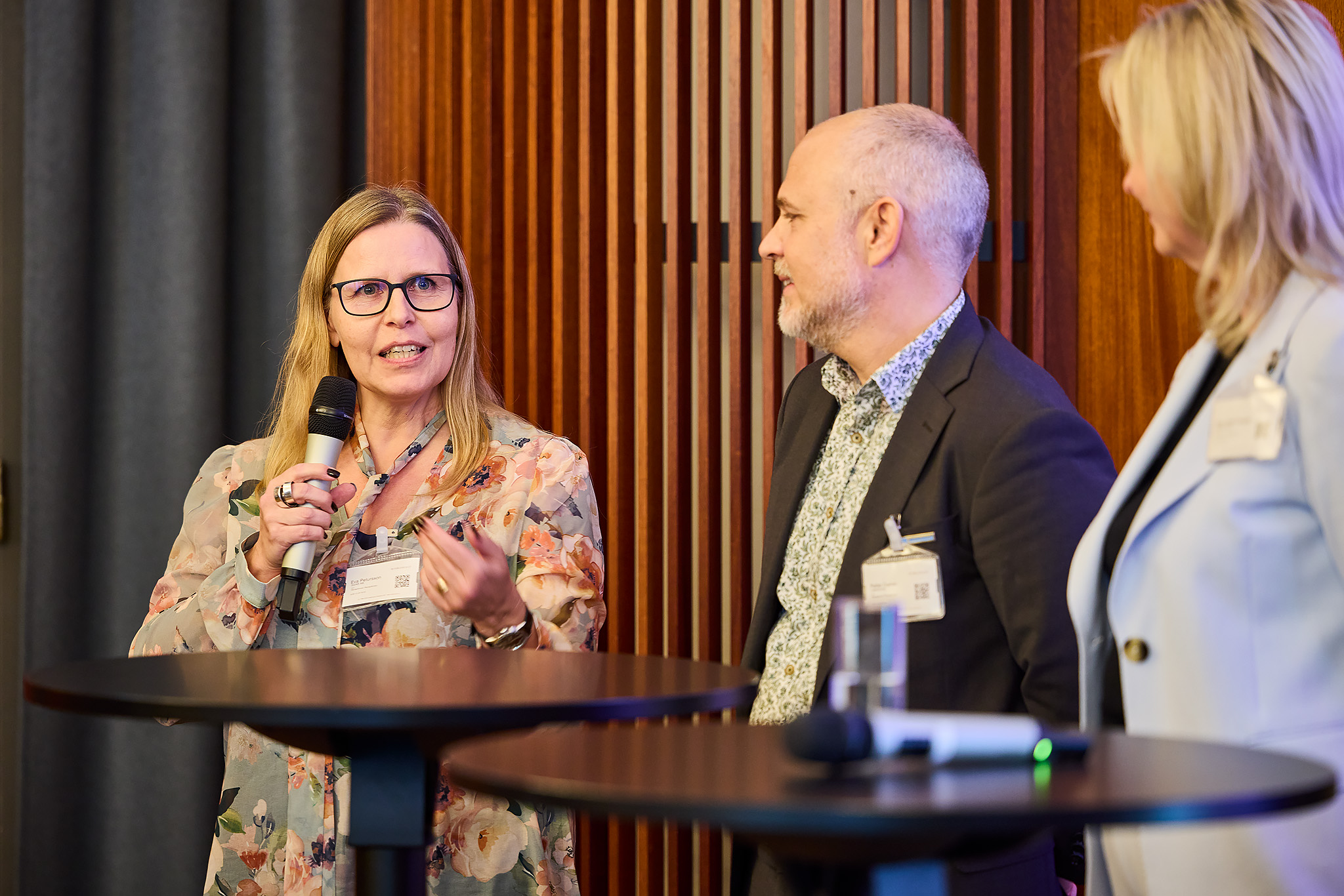
Under dagen presenterar företrädare för Jernkontorets 14 teknikområden sina forskningsbehov och framtidsbilder, med sikte mot 2040. I panelen blickar Eva Lindh Ulmgren, Eva Pétursson från SSAB, Petter Damm från Uddeholm och Rose-Marie Yttergren från Höganäs vidare mot 2050.
Frågorna skiljer sig mellan metallurgi, valsning, analys och produktutveckling. Ändå framträder den gemensamma ambitionen att förstå hur det som händer i ett led påverkar nästa, och använda den kunskapen för att tillverka bättre produkter med mindre resursåtgång.
Nya råvaror förändrar fler än en process
För metallurgin innebär omställningen förändrade förutsättningar redan vid råvaruintaget. Olle Sundqvist, Alleima, beskriver hur nya järnbärare och en ökad användning av återvunnet material ställer andra krav på processerna.
Det handlar bland annat om att förstå hur olika råvaror påverkar energibehov, legeringsutbyte och kvalitet. Frågorna försvinner inte med nya ugnar eller bättre databehandling. Hans bedömning är att industrin även 2040 kommer att arbeta med klassiska metallurgiska problem, men med mer avancerade verktyg.
Förändringarna fortsätter genom tillverkningen. Karin Hansson, Alleima, lyfter behovet av att anpassa gjutningen till nya råvaror och specialstålsorter. Inom stång- och profiltillverkning beskriver Kalevi Vainikainen, Fagersta Stainless, hur större variation i råvarornas sammansättning kan kräva bättre processkontroll för att slutprodukten ska hålla jämn kvalitet.
Även materialen som uppstår vid sidan av stålet förändras. Jonas Larsson, Höganäs, pekar på att nya processer och insatsvaror kan ge andra restproduktflöden och egenskaper. Befintliga användningsområden kan därför behöva omprövas, samtidigt som nya möjligheter öppnas.
För teknikområdet Restprodukter är målet att bättre ta vara på materialens specifika egenskaper. Men det kräver mer än en teknisk lösning. Materialen behöver också uppfylla miljö- och säkerhetskrav och accepteras av användarna.
Sett tillsammans visar presentationerna att ett råvarubyte får följder långt utanför smältningen. Det påverkar vad laboratorierna behöver analysera, hur stålet kan bearbetas och vilka andra material som går att återvinna eller sälja.
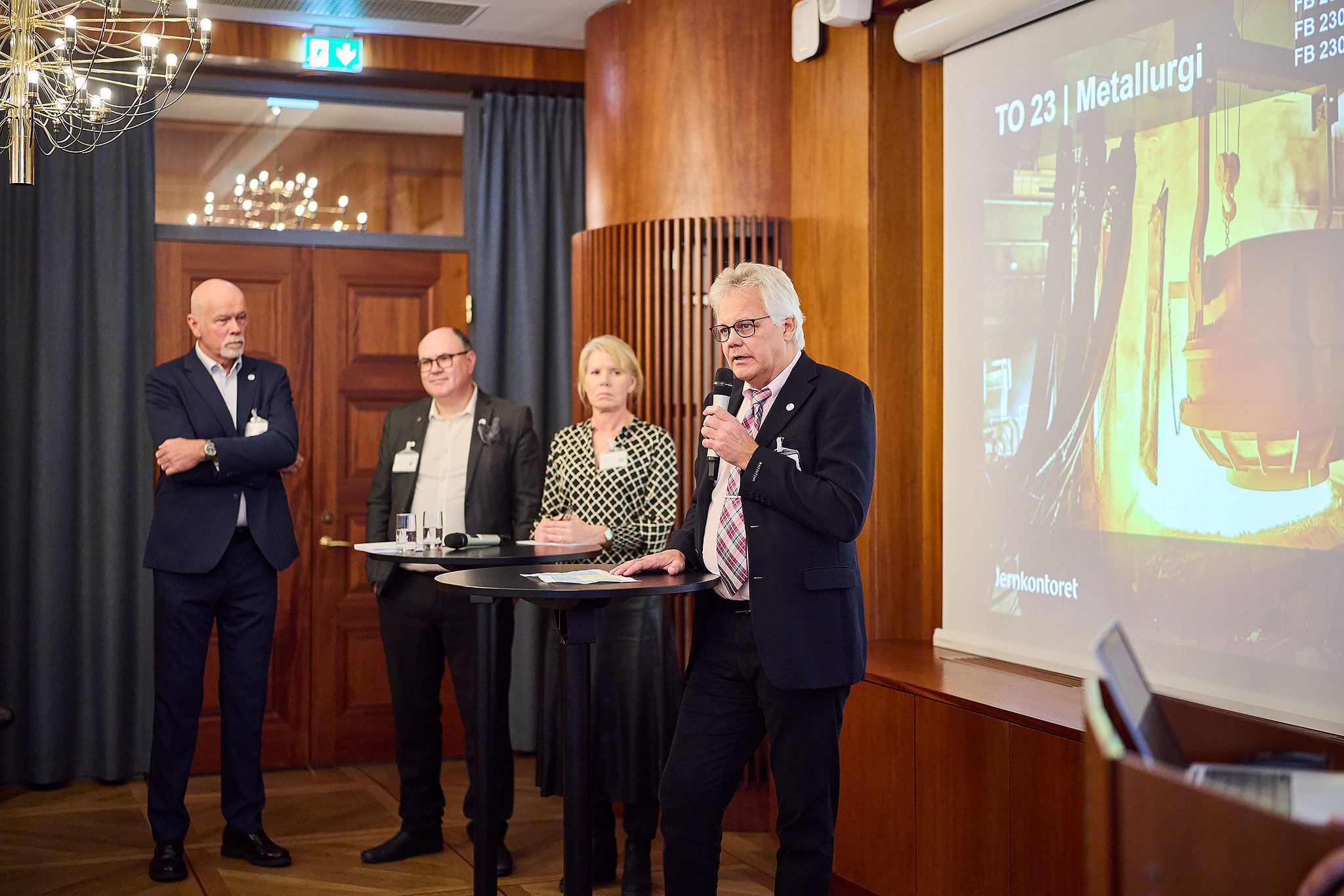
Olle Sundqvist, Alleima, presenterade framtiden för teknikområdet Metallurgi. Foto: Pia Nordlander.
Från enskilda modeller till en sammanhängande kedja
Digitaliseringen ger möjligheter att hantera dessa samband. Men flera presentationer beskriver ett avstånd mellan lyckade försök i enskilda processer och en tillverkning där informationen följer materialet genom hela kedjan.
Inom teknikområdet Digitalisering lyfts behovet av att koppla data till den smälta, det ämne eller den produkt som faktiskt bearbetas. Information från ett tidigare steg ska kunna användas när nästa process ställs in.
Det kräver både fungerande informationshantering och samarbete över organisationsgränser. Jernkontorets beskrivning av teknikområdet betonar också att nyttan av tekniken beror på hur ledarskap och organisation utvecklas.
Jonas Lagergren, SSAB, beskriver en närliggande uppgift för band- och plåttillverkningen: att föra samman modeller för flera processteg, exempelvis varm- och kallvalsning. Varje del behöver förstås, men också hur delarna påverkar varandra.
Pontus Hydén, Höganäs, för samma resonemang om ugnarna. En ugn kan inte optimeras enbart utifrån det som händer inne i den. Hänsyn behöver tas till materialets tidigare behandling och till vad som ska ske efteråt. Samtidigt måste elektrifiering och nya bränslen fungera med kraven på temperatur, kvalitet och kostnad.
I panelsamtalet beskriver Eva Pétursson möjligheten att kombinera fysikaliska modeller med data från produktionen och kundernas användning. Ambitionen är att knyta samman materialets mikrostruktur, tillverkningsprocesserna och egenskaperna i den färdiga produkten. En sådan modellkedja skulle kunna hjälpa industrin att förutsäga hur ett material beter sig och hur länge det fungerar i en viss tillämpning.
Mätningen måste gå att lita på
För att modellerna ska bli användbara behöver industrin kunna mäta rätt saker med tillräcklig noggrannhet.
Karin Hansson uttrycker vikten av att sensorer och modeller måste fungera i gjutningens krävande miljö. Hon visar också på grundforskningens betydelse: en digital beskrivning av processen behöver bygga på förståelse för de fysikaliska fenomen som faktiskt styr den.
Helena Ekström, SSAB, visar hur konkret kopplingen mellan analys och beslut är. Laboratorierna undersöker råvaror, processprover och färdiga produkter. I vissa delar av verksamheten behöver svaret komma inom några minuter. Samtidigt kan osäkerhet i analysen påverka både kvalitet och kostnad. Mer automation får därför inte ske på bekostnad av noggrannheten. Hennes framtidsbild handlar också om att digitalisering och automation kan avlasta personalen från återkommande moment och frigöra tid för mer kvalificerat analysarbete.
Inom oförstörande provning beskriver Anders Björk, Ovako, hur resultaten kan användas för mer än att avgöra om en produkt är godkänd. Genom att koppla provningsdata till tillverkningen kan företagen försöka förstå vilka tidigare förhållanden som har gett upphov till fel. Målet att utveckla provningen från slutkontroll till stöd för processtyrning finns också i teknikområdets verksamhetsbeskrivning.
Detta ger en viktig precisering av dagens tal om datadriven industri. Att samla in information är ett första steg. Nästa är att förstå vad den betyder och vilket beslut den ska förbättra.
Eva Lindh Ulmgren återkommer till behovet av att fortsätta utveckla materialanalysen. AI kan hjälpa till att hitta samband i tillgängliga data, men forskningen behöver också tillföra nya observationer och ny kunskap.
Snabbare utveckling kräver kundernas medverkan
En återkommande förväntan är att modeller och AI ska korta tiden från materialidé till användbar produkt.
Thomas Müller, SSAB, beskriver behovet av att utveckla stålsorter i takt med kundernas förändrade produkter. Materialutvecklingen behöver bli snabbare, samtidigt som stålet måste kunna tillverkas och uppfylla kraven i användningen.
Anders Östlund, Alleima, pekar på möjligheten att förena kunskap om legeringssammansättning, mikrostruktur, korrosion och svetsning i mer tillförlitliga materialmodeller. Företagen har samlat stora mängder information genom åren. En framtida uppgift är att göra den användbar i utvecklingen av nya material.
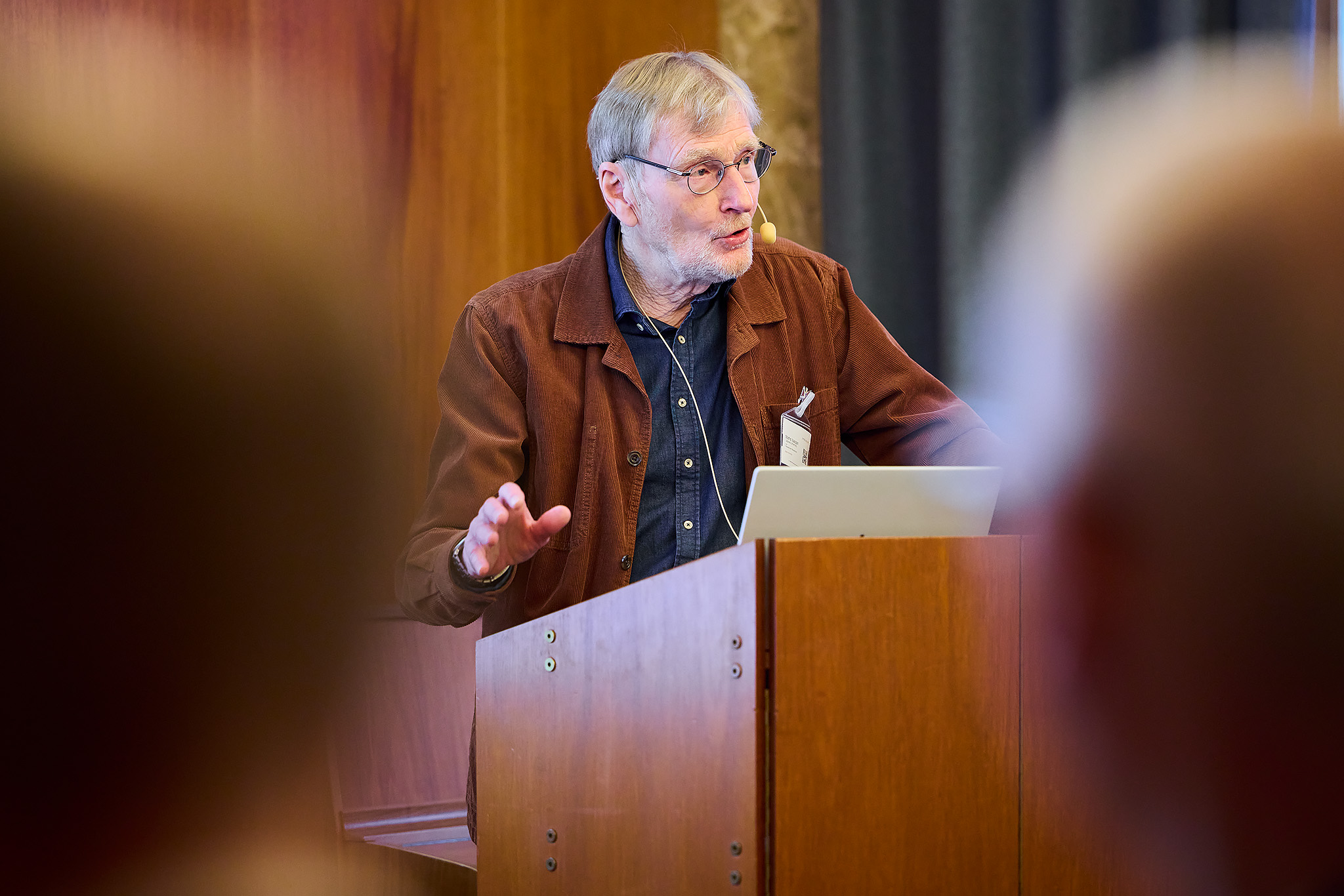
Anders Östlund från Alleima presenterade framtiden ur perspektivet Rostfria stål. Foto: Pia Nordlander.
I panelen beskriver Eva Lindh Ulmgren hur krävande tillämpningar inom bland annat energi och rymd kan driva utvecklingen. Material behöver tåla högre temperaturer, högre tryck eller andra belastningar. Hennes bedömning är att kundrelationen därmed också förändras.
– Nu köper kunder egenskaper, säger hon och menar att de på sikt, i större utsträckning, kommer att köpa lösningar, där funktion och livslängd får en tydligare plats. Det kräver att materialtillverkare och användare utvecklar kunskapen tillsammans.
Det räcker heller inte att ta fram ett material snabbare om kunderna inte kan bedöma om det är säkert och tillförlitligt i deras verksamhet. Hon lyfter digitala modeller av materialets beteende och åldrande som ett möjligt stöd för att introducera nya material i tillämpningar med höga säkerhetskrav.
David Eidhagen, Alleima, berör samma möjlighet från rörtillverkningens perspektiv. Bättre modeller av produkten och dess tillverkning kan på sikt också ge ett bättre underlag för att diskutera hur röret fungerar hos kunden.
Thomas Müller från SSAB gav sin framtidsvision för teknikområdet Stålutveckling och applikationer. Foto: Pia Nordlander.
När kunskapsförsprånget utmanas
Petter Damm för diskussionen vidare till vad nya beräkningsmöjligheter skulle kunna betyda för konkurrensen. I ett långsiktigt scenario ser han möjligheter att kombinera AI med kvantteknik för att undersöka komplexa materialsystem.
Det är en framtidsspaning. Men frågan han ställer är relevant redan när mer tillgängliga verktyg börjar förändra utvecklingsarbetet: hur försvarar ett etablerat företag sitt försprång om även mindre aktörer kan få tillgång till avancerad materialmodellering?
Eva Lindh Ulmgren ser företagens egna data som en möjlig konkurrensfördel. Samtidigt befarar hon att just det kan göra samarbete svårare. Om värdet ligger i att använda gemensamt tillgängliga verktyg på unik information blir det mer känsligt att öppna den informationen för andra.
Där möter framtidsdiskussionen kärnan i hundraårsjubileet. Gemensam forskning bygger på att företagen hittar frågor som de tjänar på att undersöka tillsammans. Med mer datadrivet utvecklingsarbete kan gränsen mellan gemensam kunskap och företagsspecifik information behöva dras på nya sätt.
Panelen ger inget färdigt svar på hur det ska ske. Däremot återkommer betydelsen av nära kundrelationer, materialkunnande och samarbete längs värdekedjan. Tillgång till en modell är en del av arbetet. Företaget måste också kunna tillverka materialet, förstå användningen och leverera det som kunden behöver.
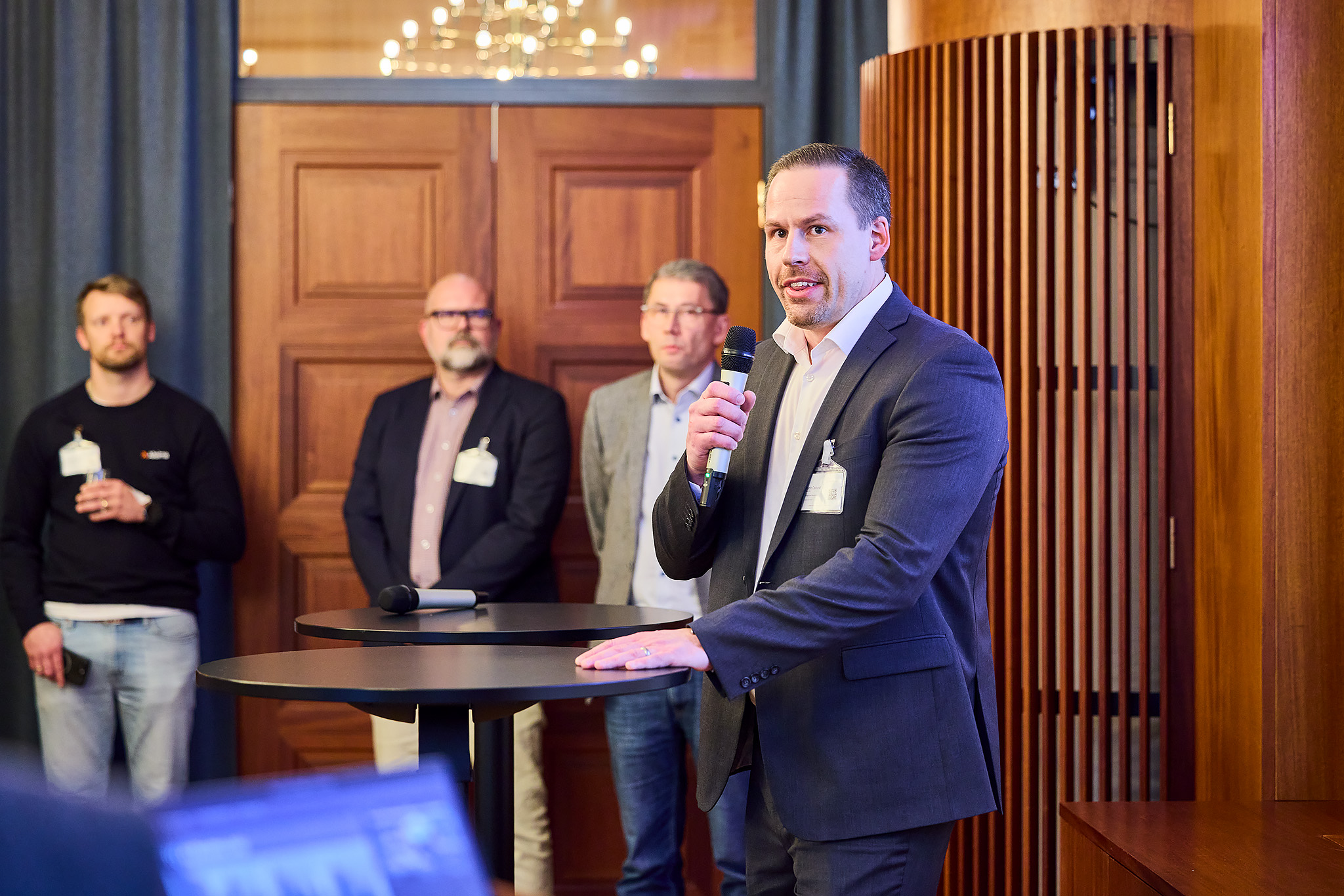
Eva Pétursson och Petter Damm ingick i panelen som bidrog med framtidsspaningar. Foto: Pia Nordlander.
Olika bilder av den globala marknaden
Teknikutvecklingen sker dessutom på en marknad vars framtida struktur paneldeltagarna bedömer olika.
Eva Pétursson uttrycker en förhoppning om att världen åter ska bli mer globalt sammanlänkad. Samtidigt behöver företagen anpassa sig till de förhållanden som råder nu.
Eva Lindh Ulmgren är mindre övertygad om en återgång. Hon beskriver hur kunder i bland annat Kina och Indien efterfrågar lokal tillverkning. När sådana värdekedjor väl har byggts upp tror hon att utvecklingen kan bli svår att vända.
Det kan påverka hur företagen organiserar både produktion och kompetens. Att samla verksamhet ger fördelar, men närhet till marknaden kan kräva andra lösningar.
Hon varnar också för att utgå från att svenska tillverkares kvalitetsförsprång består. Hennes bedömning är att konkurrenter i Kina och Indien utvecklas snabbt och att företagen därför måste fortsätta förbättra sig.
– Men vi får inte bli så självgoda, säger hon.
Kompetensen måste utvecklas med verktygen
Rose-Marie Yttergren ser en framtid där nya användningsområden och andra råvaror behöver hanteras tillsammans med ett bredare hållbarhetsarbete. Men hon påminner också om att framtidens forskning kan bygga på sådant som redan har undersökts och senare lagts åt sidan. Förändrade förutsättningar kan göra äldre spår intressanta igen.
Det kräver både bevarad kunskap och beredskap att lära nytt.
Samma behov återkommer i teknikområdenas presentationer. Helena Ekström beskriver risken att laboratorier förlorar erfarenhet när kunniga medarbetare slutar. Joachim Törnfeldt, Hjulsbro Steel, lyfter betydelsen av att hålla forskning och utbildning inom trådteknik levande, samtidigt som tillverkningen behöver automatiseras och effektiviseras.
Petter Damm menar att industrin också behöver bli bättre på att ta till vara de färdigheter som yngre medarbetare för med sig, inte minst när det gäller att använda digitala verktyg. Rekrytering handlar då både om att väcka intresse för branschen och om att skapa arbetsuppgifter där nya kunskaper faktiskt får användas.
Genom presentationerna löper därmed en mer krävande uppgift än att införa enskilda digitala verktyg. Mätningar måste vara tillförlitliga, modellerna måste beskriva relevanta samband och resultaten måste kunna användas i tillverkningen. Kompetensen behöver finnas för att bedöma när de fungerar och när de ger missvisande svar. Det är i dessa kopplingar som mycket av den framtida forskningsnyttan finns. Samma samband mellan kemi, process, struktur och egenskaper behöver fortfarande förstås. Och slutprodukterna behöver möta verkliga behov hos kunderna. Nästa försprång måste byggas hela vägen från förståelsen av materialet till nyttan hos kunden.
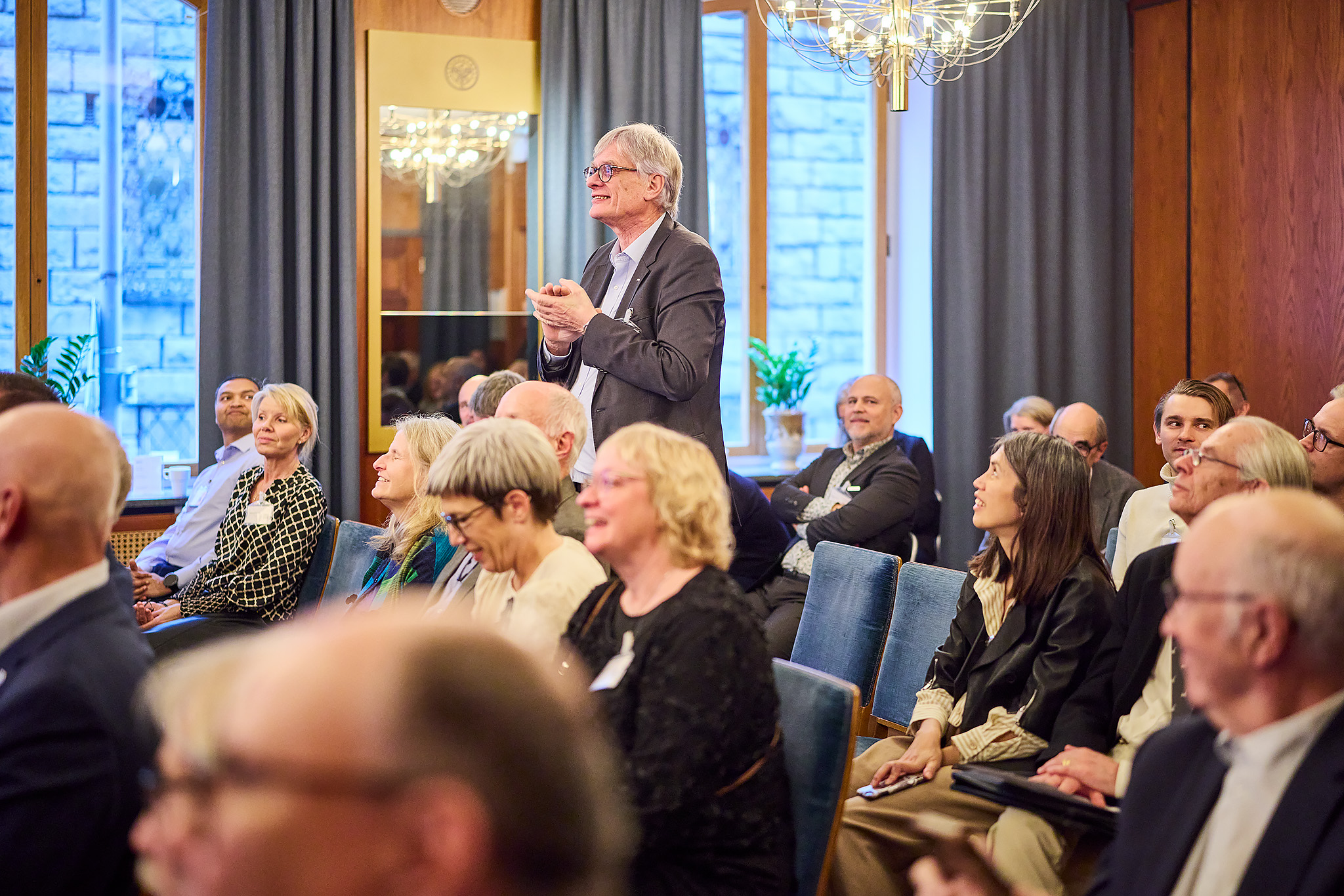
Göran Carlsson, en engagerad frågeställare under jubileumsseminariet. Foto: Pia Nordlander.
Fjorton teknikområden blickar framåt
Jernkontorets gemensamma forskning är organiserad i 14 teknikområden, TO. Här sammanfattas de viktigaste framtidsfrågorna från presentationerna under jubileumsseminariet. Översikten återger talarnas prioriteringar och framtidsbilder, inte en gemensamt beslutad färdplan.
Teknikområde
Frågor som lyfts inför framtiden
TO 23 Metallurgi
Anpassa processerna till nya järnbärare och mer återvunnet material. Bättre mätning och modeller ska stödja styrningen av bland annat energi, legeringsutbyte och stålets renhet.
TO 24 Gjutning och stelning
Gjutningen behöver klara förändrade råvaror och mer avancerade stålsorter. Robusta sensorer och bättre förståelse för flöden och stelning ska bidra till färre defekter.
TO 31 Band och plåt
Koppla samman modeller för flera bearbetningssteg. Bättre mätning och simulering ska underlätta tillverkningen av alltmer krävande material med rätt form, yta och egenskaper.
TO 32 Stång och profil
Öka processernas flexibilitet och stabilitet när materialens sammansättning varierar. Bättre förståelse för uppvärmning och valsning ska minska förluster och säkra kvaliteten.
TO 33 Tråd
Optimera samspelet mellan material, smörjning, kylning och verktyg. Automation och återkoppling från sensorer ska effektivisera dragningen, samtidigt som forskning och kompetens behöver säkras.
TO 34 Rör
Förena operatörernas erfarenhet med mätbara samband och modeller, exempelvis vid riktning. Målet är bättre förutsägbarhet och processer som kan anpassas till materialets variationer.
TO 41 Stålutveckling och applikationer
Utveckla material snabbare utifrån kundernas krav. Frågor som väteförsprödning, korrosion, formbarhet och utmattning behöver kopplas till hur produkterna ska användas.
TO 43 Rostfria stål
Utveckla mer tillförlitliga modeller för sambanden mellan sammansättning, mikrostruktur och egenskaper. Historiska data och nya analyser ska ge stöd för effektivare materialutveckling.
TO 44 Oförstörande provning och mätteknik
Använda provningsresultat för att förbättra tillverkningen, utöver att kontrollera slutprodukten. Kopplingen mellan detekterade fel och tidigare processförhållanden är central.
TO 45 Analytisk kemi
Utveckla analyser för nya råvaror och material utan att förlora noggrannhet när arbetet automatiseras. Referensmaterial, kvalitetssäkring och överföring av erfarenhet förblir viktiga.
TO 51 Energi- och ugnsteknik
Utveckla kostnadseffektiv elektrisk uppvärmning och användning av alternativa bränslen. Ugnarnas styrning behöver ta hänsyn till både tidigare och efterföljande processteg.
TO 55 Restprodukter
Hitta användningar där sekundära råvarors egenskaper ger nytta. Förändrade materialflöden kräver kunskap, spårbarhet och kvalitetssäkring samt uppfyllda miljö- och säkerhetskrav.
TO 60 Digitalisering
Gå från lösningar för enskilda maskiner till sammanhängande informationsflöden. Datahantering, digital spårbarhet och samarbete mellan teknik, organisation och människor blir avgörande.
TO 80 Pulvermetallurgi
Förbättra karakterisering, renhet och kontroll genom kedjan från pulver till komponent. Standardisering, återvinning och kunskapsöverföring ska också underlätta fler användningsområden.
Nya stålsorter, effektivare processer och möjligheten att undersöka materialets minsta beståndsdelar har förändrat svensk stålindustri. Samtidigt har arbetet och samhällena kring verken omformats. När Jernkontoret uppmärksammar hundra år av gemensam forskning visar Olle Wijk, Maths Isacson och Bevis Hutchinson hur utvecklingen har gått till, och varför nästa steg fortfarande kräver förståelse för både material och människor.
Mats Janson
22 oktober,
2026
•
9 minuters läsning
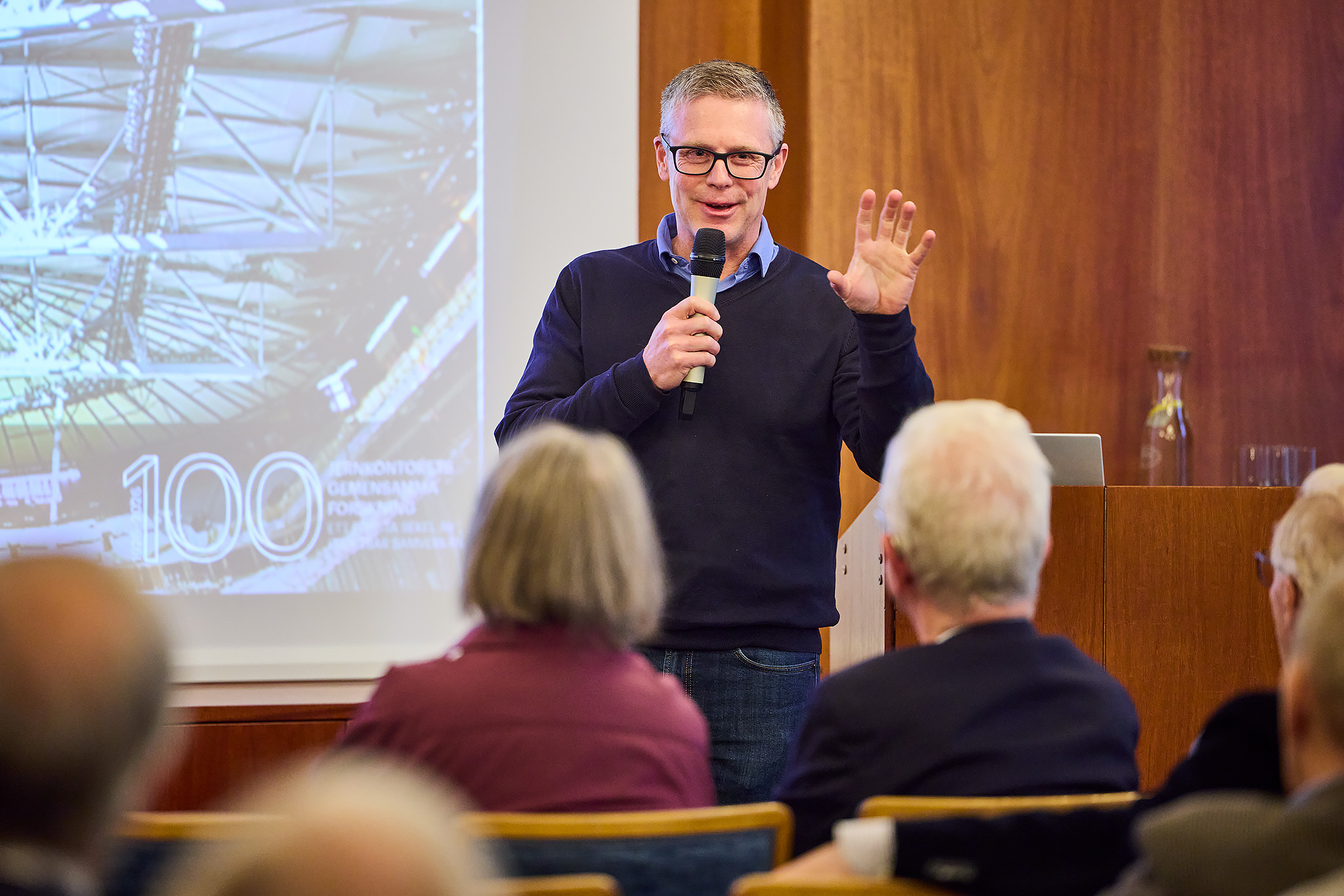
Olle Wijk från Jernkontorets bergshistoriska utskott berättade om den metallurgiska utvecklingen under hundra år av gemensam forskning.Pia Nordlander
En mikroskopbild från 1926 visar stålets struktur i tretusen gångers förstoring. Nästan ett sekel senare tycker Bevis Hutchinson fortfarande att bildkvaliteten håller måttet. Forskarna hade lärt sig att slipa, polera och etsa fram strukturer som annars var osynliga.
Bilden ingår i hans tillbakablick vid Jernkontorets jubileumsseminarium i Stockholm den 20 oktober. Den påminner om att stålforskningens historia också är en historia om att göra materialet möjligt att undersöka. Vad händer när stålet värms, deformeras och kyls? Vilka partiklar finns inuti det? Varför håller ett material för en viss belastning medan ett annat brister?
Under dagen beskriver också metallurgen Olle Wijk hur nya processer har förändrat tillverkningen. Maths Isacson, professor emeritus i ekonomisk historia vid Uppsala universitet, följer förändringen ut genom verksportarna till bostäderna, familjerna och brukssamhällena. Bevis Hutchinson, forskare vid Swerim och verksam inom materialforskningen i fem decennier, visar hur instrumenten har gjort allt fler samband synliga.
Tillsammans ger deras berättelser en bild av en industri där framstegen har krävt att material, tillverkning och kunskap utvecklas samtidigt.
Samarbete i en tid av kris
När Jernkontorets gemensamma forskning fick sin nya organisation 1926 hade svensk järn- och stålindustri gått igenom svåra år. Maths Isacson beskriver en period av nedläggningar, sammanslagningar och konflikter på arbetsmarknaden. För de anställda och orterna kring bruken var industrins fortsatta utveckling långt ifrån självklar.
Det tekniska samarbetet inom Jernkontoret var då redan gammalt. Men efter ett besök hos den tyska systerorganisationen Verein Deutscher Eisenhüttenleute, VDEh, som precis börjat med gemensam forskning, föreslog Alf Grabe, metallurg, forskare och bland annat redaktör för Jernkontorets Annaler, en ny organisation. I maj 1926 beslutade fullmäktige att samla forskningen i fyra utskott, med uppgifter från gruvbrytning och anrikning till bearbetning och värmebehandling. Syftet var att engagera både brukens ägare och personal tydligare i arbetet.
Olle Wijk beskriver en industri där tillverkningsmetoden i sig länge hade fungerat som en kvalitetsbeteckning. Processen berättade något om vilket stål kunden kunde förvänta sig. Under det följande seklet blev möjligheterna att styra sammansättning, renhet och struktur allt mer avancerade.
Hans återkommande poäng är att ett nytt material måste kunna tillverkas med rätt och jämna egenskaper. En fin anläggning räcker inte utan kunskapen att använda den. Han jämför med en fiol: instrumentets kvalitet hjälper inte om den som håller i det inte kan spela.
En gammal väg till järnsvamp
Ett av Olle Wijks historiska exempel är Wibergprocessen, ett tidigt svenskt försök att framställa järnsvamp genom gasbaserad direktreduktion.
För att göra metalliskt järn av järnmalm måste syret avlägsnas. I Wibergprocessen som patenterades 1918 skedde detta med en reducerande gas i en schaktugn. En viktig del av lösningen var att återföra och regenerera gasen. Jernkontoret bidrog till utvecklingsarbetet, och metoden prövades och användes vid flera svenska järnverk.
Dagens intresse för vätgasbaserad järnframställning ger historien aktualitet. Wibergprocessen var kolbaserad, men den hör till de tidiga exemplen på att reducera malm med cirkulerande gas och framställa järnsvamp utan att först smälta järnet i en masugn.
För Olle Wijk är detta också en personlig historia. Han berättar om underhållsarbete i anläggningen i Sandviken, där han och en arbetskamrat klättrade ned på repstegar och arbetade med spett för att bända loss järn från ugnens insida. Det är en annan bild av metallurgisk utveckling än den som ryms i ett processchema: teknik som skulle fungera behövde också skötas, rengöras och underhållas.
Exemplet visar dessutom hur frågor kan återkomma med nya förutsättningar. Att en process har en lång historia innebär inte att dess problem är lösta. Råvaror, reduktionsmedel, energiförsörjning och produktionsskala påverkar vad som blir tekniskt och ekonomiskt möjligt.
När skänken blev ett processverktyg
Med skänkmetallurgin förändrades möjligheten att styra det flytande stålets kvalitet. Skänken, behållaren som förde stålet från smältugn till gjutning, fick en aktiv roll i behandlingen.
Olle Wijk lyfter ASEA-SKF-processen, som kombinerade möjligheter till uppvärmning, elektromagnetisk omrörning och vakuumbehandling i skänken, alltså under steget mellan smältning och gjutning. Stålets temperatur och sammansättning kunde justeras och lösta gaser avlägsnas. Samtidigt frigjordes själva smältugnen för nästa smälta.
Det gav också bättre förutsättningar att påverka de icke-metalliska inneslutningarna: små partiklar vars storlek, sammansättning och form kan få stor betydelse för materialets egenskaper. Kraven ser olika ut beroende på om stålet exempelvis ska tåla långvarig upprepad belastning eller vara lätt att bearbeta.
Jernkontorets forskningsprogram inom skänkmetallurgi under 1980-talet fördjupade kunskapen om processerna och metoderna för att framställa renare stål.
Stränggjutningen innebar en annan stor förändring. Stålet kunde gjutas kontinuerligt till långa ämnen, i stället för att först stelna i en form till enskilda göt som krävde ytterligare bearbetning. Materialutbytet förbättrades och antalet processteg kunde minska.
Men Olle Wijk använder också gjutningen för att visa hur känslig en fungerande process kan vara. Han beskriver ett fall där gjutpulvret inte fungerade som avsett. Pulvret ska bland annat bidra till smörjningen mellan stålet och kokillen. När förhållandena förändrades försämrades ytan successivt och material behövde kasseras.
Det stora tekniksprånget följdes alltså av ett långvarigt arbete med flöden, kylning, skydd mot luft och kontroll av inneslutningar. En etablerad metod behöver fortsätta utvecklas när nya stålsorter och kvalitetskrav tillkommer.
Framstegen nådde också bostäderna
Utanför verken hade industrins utveckling andra måttstockar. Maths Isacson beskriver hur arbete och bostad länge var tätt sammanbundna på bruksorterna. Bruket var som regel både arbetsgivare och hyresvärd och hade ett omfattande inflytande över ortens sociala liv.
Bostaden kunde ingå som en del av ersättningen för arbetet. Naturasystemet gav tillgång till bostad men gjorde också den anställde mera beroende av sin arbetsgivare. Trångboddhet och brist på vatten, avlopp och moderna bekvämligheter präglade många arbetarfamiljers vardag.
När bostadsbyggandet tog fart under efterkrigstiden förändrades detta. Kommuner, företag och andra aktörer byggde nya bostäder, samtidigt som samhällsfunktioner som tidigare hade legat hos bruken fick andra huvudmän. I Maths Isacsons genomgång blir moderna kök och tvättmöjligheter konkreta exempel på förändringar som lätt hamnar utanför den industrihistoriska berättelsen.
För kvinnorna, som bar en stor del av hushållsarbetet, kunde bättre bostäder innebära att tungt och tidskrävande arbete underlättades. Industrins expansion tog också form i bibliotek, Folkets hus och idrottsanläggningar. Bruksorterna var platser där människor skulle leva hela sina liv.
Samtidigt var arbetet i verken riskfyllt. Maths Isacson använder bland annat konstnären och tidigare industriarbetaren Johan Ahlbäcks bilder för att skildra arbetsvillkoren. Han beskriver hur tekniska förändringar och arbetsmiljöarbete kunde minska riskerna, men också hur olycksfallen åter ökade under perioder av stark expansion så sent som på 1970-talet.
Hans genomgång visar att högre produktion och bättre levnadsvillkor inte följde varandra automatiskt. Bostadsbyggande, arbetsmiljöåtgärder och samhällsplanering krävde egna beslut och insatser.
Krisen förändrade bruksorterna
När stålindustrins villkor försämrades under mitten av 1970-talet fick omställningen följder långt utanför företagens ekonomi. Maths Isacson beskriver hur internationell konkurrens och förändrade marknader bidrog till rationaliseringar och minskad sysselsättning.
På orter som hade byggt för fortsatt tillväxt kunde hela bostadsområden gapa tomma. Företagens behov förändrades, samtidigt som samhällen och familjer behövde hantera följderna.
Han påpekar också att sysselsättningsstatistiken behöver läsas med omsorg. Arbetsuppgifter inom exempelvis transporter, underhåll och service fördes över till externa företag. En del arbete försvann ur stålföretagens personalstatistik utan att för den skull upphöra.
Historien har en direkt koppling till dagens kompetensförsörjning. En industrietablering kan behöva ingenjörer, ekonomer och operatörer, men den som ska flytta behöver också en fungerande vardag. Bostad, möjligheter för en medföljande partner och barnens situation påverkar om rekryteringen leder till en varaktig inflyttning.
Maths Isacson återkommer därför till behovet av att se utvecklingen i verken tillsammans med utvecklingen på orten.
– Produktion, företag och samhälle måste gå hand i hand för att man ska ha chans att utveckla, säger han.
Maths Isacson från Uppsala universitet berättade om människorna och samhällena runt stålindustrierna. Foto: Pia Nordlander.
Instrumenten öppnade stålets inre
Medan produktionen och bruksorterna förändrades flyttade forskarna gränsen för vad som gick att undersöka i materialet.
Bevis Hutchinson följer utvecklingen från optisk mikroskopi till elektronmikroskopi och metoder som både kan avbilda och analysera mycket små områden. Hans berättelse rymmer avancerade instrument, men också det praktiska kunnande som krävs för att få användbara resultat.
Att framställa ett prov med rätt yta, tjocklek och orientering är en del av undersökningen. Den tidiga mikroskopbilden från 1926 visar vad skicklig provberedning kunde åstadkomma. Elektronmikroskopen gjorde det senare möjligt att studera detaljer bortom ljusmikroskopets upplösningsförmåga.
När lokal kemisk analys blev möjlig kunde forskarna också identifiera små inneslutningar i stålet. De kunde börja koppla partiklarnas sammansättning till hur de hade bildats och hur tillverkningsprocessen behövde förändras. Jernkontorets gemensamma forskning tog bland annat upp mikrosondtekniken i en särskild kommitté 1960.
Här möts Bevis Hutchinsons och Olle Wijks berättelser. Processutvecklaren behöver kunna påverka inneslutningarna och materialforskaren behöver kunna upptäcka, mäta och beskriva dem. Kunskapen från laboratoriet får sitt industriella värde när den kan användas för att förbättra tillverkningen.
Men större och mer avancerad utrustning gav inte alltid de genombrott som man hade hoppats på. Bevis Hutchinson berättar om ett opraktiskt stort högspänningselektronmikroskop från omkring 1970 som öppnade möjligheter att undersöka tjockare prov och följa förändringar i materialet. Ett viktigt värde som inte var lika lätt att tillskanska sig var dock möjligheten att studera större områden och därmed få ett mer representativt underlag. Även när instrumenten blev mer avancerade kvarstod alltså frågan om det som syntes i provet verkligen beskrev materialet som helhet.
Från provbit till pågående process
Mot slutet av sin tillbakablick lämnar Bevis Hutchinson mikroskopen för en metod som kan användas medan stålet fortfarande är varmt: laserultraljud.
En laserpuls alstrar ultraljud i materialet. Ett andra lasersystem registrerar rörelsen vid ytan. Eftersom ljudvågornas dämpning påverkas av kornstrukturen kan signalerna, med rätt kalibrering, användas för att uppskatta kornstorleken.
Det ger möjlighet att följa förändringar under uppvärmning och bearbetning. I laboratoriet kan forskarna kombinera tekniken med en termomekanisk simulator och undersöka hur kornstrukturen förändras under kontrollerade förhållanden.
Nästa steg är att mäta i själva produktionen. Bevis Hutchinson beskriver installationen i SSAB:s varmvalsverk i Borlänge, där laserultraljud används för att följa kornstorleken längs det varma bandet. Metoden och mätningarna finns också beskrivna i en forskningsartikel av forskare och industriföreträdare, med honom själv som en av författarna.
I exemplet han visar kan variationer i strukturen kopplas till hur ämnet tidigare har värmts i ugnen. Där hade stöden under ämnet påverkat uppvärmningen. Spåren kunde finnas kvar i kornstrukturen även när temperaturen senare hade blivit jämn.
– Metaller har mycket långa minnen, säger Bevis Hutchinson.
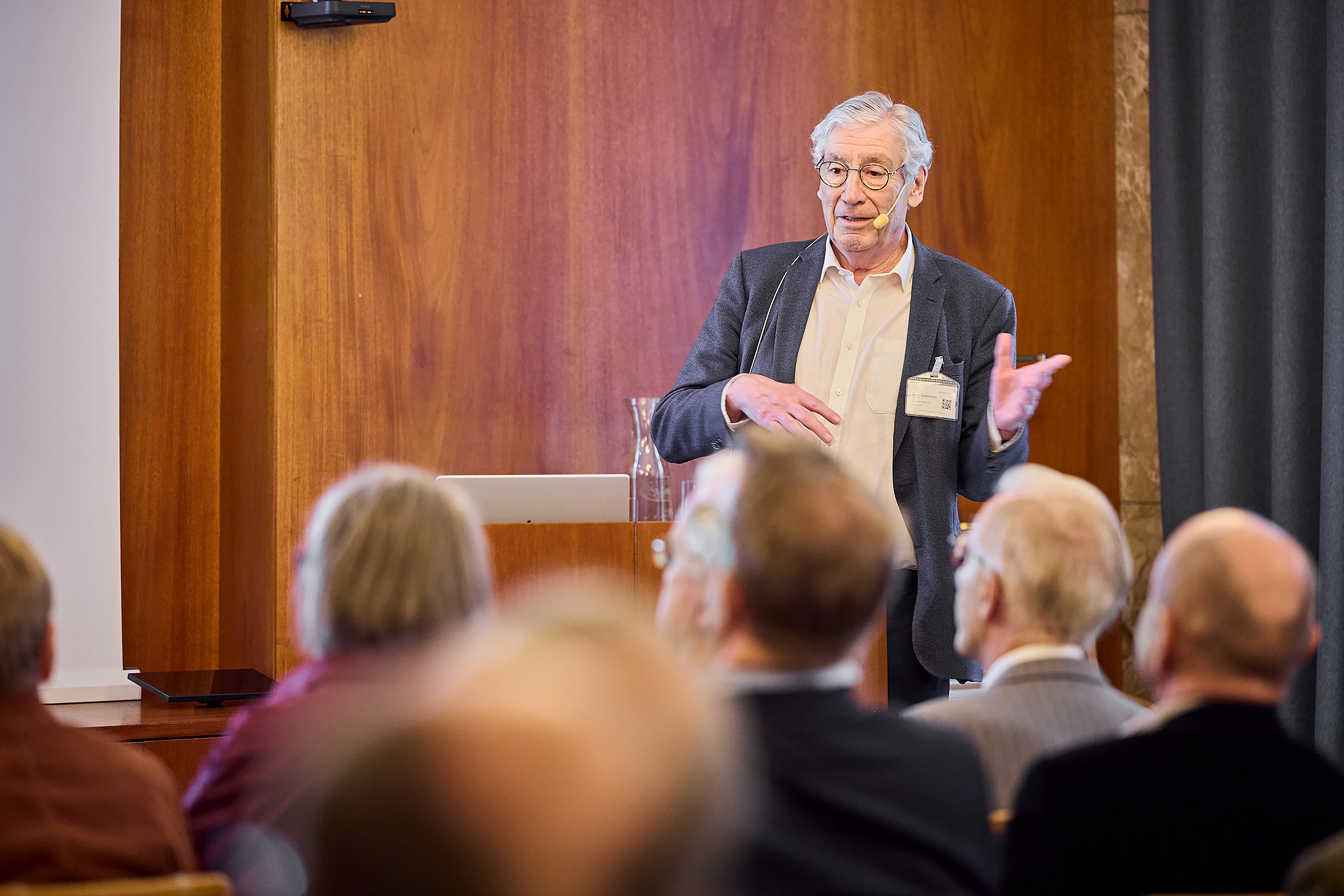
Bevis Hutchinson från Swerim berättade om metallurgiska analysmetoder. Foto: Pia Nordlander.
Det är ett konkret exempel på varför en mätning i slutet av processen kan behöva förstås genom det som hände långt tidigare. Materialet bär med sig följderna av sin behandling.
Bevis Hutchinson, som vid jubileet tilldelas Jernkontorets Rinmanmedalj, framhåller också hur kunskapen har förts vidare genom industriprojekt, kurser och människor som lämnat institutet för arbete i företagen. Instrumenten har varit viktiga. Detsamma gäller förmågan att använda dem och tolka resultaten.
Från mikroskopbilden 1926 till mätningar i varmvalsverket löper en strävan att förstå stålet tillräckligt väl för att kunna påverka det. Olle Wijks uppmaning knyter ihop den historien:
– Jobba med att ta fram material, men tillsammans med produktionen.
Core-template använder cookies för att förbättra din användarupplevelse, för att ge underlag till förbättring och vidareutveckling av hemsidan samt för att kunna rikta mer relevanta erbjudanden till dig.
Läs gärna vår personuppgiftspolicy. Om du samtycker till vår användning, välj Tillåt alla. Om du vill ändra ditt val i efterhand hittar du den möjligheten i botten på sidan.